
Distemper vs Emulsion: Making the Right Choice
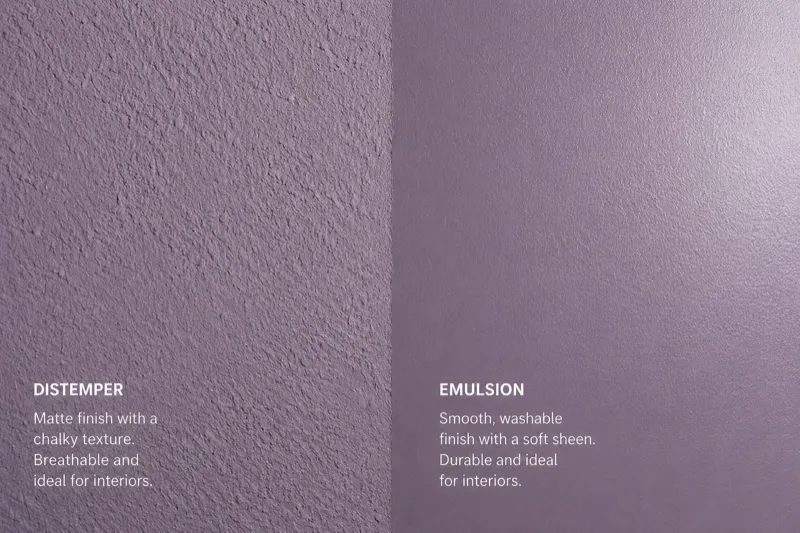
When deciding to paint your home in India, you will inevitably run into the two most common types of interior wall paints: Distemper and Emulsion. They cater to completely different budgets, expectations, and lifetimes. But what exactly is the chemical difference, and which one should you choose?
Choosing the wrong paint can result in either wasting money on a temporary rental property or, conversely, facing peeling walls and un-washable stains in a forever home. Let's break down everything you need to know.
What is Distemper? (The Traditional Choice)
Distemper is one of the oldest forms of paint known to mankind. Historically, it was made from chalk, lime, water, and animal glue. Today's modern "acrylic distempers" are slightly upgraded with synthetic resins to improve longevity, but they remain a very basic, economical choice.
Because it is essentially colored chalk mixed with water, it leaves a very matte, powdery finish. It does not create a strong, flexible film over the wall.
Advantages of Distemper:
- Highly Affordable: It is significantly cheaper than emulsion, making it the go-to choice for massive commercial projects or budget housing.
- Breathable: Because it doesn't form a thick plastic film, it allows walls to breathe, which can be beneficial for older, damp masonry.
- Minimal Prep: It often doesn't require a primer before application—just a coat of putty is usually enough.
Disadvantages of Distemper:
- Not Washable: If you wipe a distemper wall with a wet cloth, the paint will come off onto the cloth.
- Low Durability: It fades faster, cracks easily under stress, and typically needs repainting every 2-3 years.
- Chalky Finish: Brushing against the wall can sometimes leave a white, chalky residue on your clothes.
What is Emulsion? (The Modern Standard)
Emulsion is a water-based paint where pigment particles are suspended in water along with acrylic or vinyl resins. When the water evaporates, the resins bind together to form a tough, flexible, and continuous microscopic film over your wall.
This film-forming capability is what gives emulsion its superpower: washability and immense durability. It is the standard choice for modern homes across the globe.
Advantages of Emulsion:
- Washable: Stains, pencil marks, and dirt can be wiped off with a damp sponge without damaging the paint.
- Highly Durable: A good quality emulsion can easily last 5 to 10 years without fading or peeling.
- Versatile Finishes: It is available in matte, eggshell, satin, and high-gloss finishes.
- Fungus Resistant: Most premium emulsions contain additives that resist mold and mildew.
Disadvantages of Emulsion:
- More Expensive: It costs 2x to 5x more per liter compared to distemper.
- Requires Prep: You must properly prepare the wall with wall putty and a dedicated primer coat, which adds to labor and material costs.
Cost Comparison (2026 Estimates)
| Feature | Acrylic Distemper | Premium Emulsion |
|---|---|---|
| Lifespan | 2 - 3 Years | 5 - 10 Years |
| Washability | Zero to Low | High (Scrub-resistant) |
| Finish Options | Matte only | Matte, Satin, Silk, Gloss |
| Approx. Cost (with labor) | ₹10 - ₹15 per sq.ft. | ₹25 - ₹40 per sq.ft. |
The Final Verdict
If you are painting a rental property, a godown, or are on a very strict budget and plan to repaint in a couple of years anyway, Distemper is a practical, economical choice. However, if you are painting your own forever home, have kids or pets, and want a finish that looks premium, lasts for a decade, and can be wiped clean, Emulsion is undoubtedly the better long-term investment.